
The typical car inspection cost in 2026 is $0 to $70 a year, and in 21 states it is nothing at all because no periodic check is required. Where a program charges a fee, the yearly figure runs from $7 in Maryland to $70 in Pennsylvania, with a national average of $15. That is the same per-state number our cost of car ownership calculator and vehicle registration fee calculator add to your yearly bill, so the table below and both tools always agree.
How Much Does a Car Inspection Cost, and What Are You Paying For?
A state inspection (also called a vehicle inspection) is a government-required check that a registered vehicle meets safety rules, emissions limits, or both. You pay the fee to a licensed inspection station (a repair shop, dealership service lane or state-run lane), and the result is a sticker or an electronic record tied to your registration.
Two kinds of test drive the price:
- Safety inspection: a technician checks brakes, tires, lights, turn signals, seat belts, horn, wipers and the exhaust system for leaks. 13 states still require one on passenger vehicles.
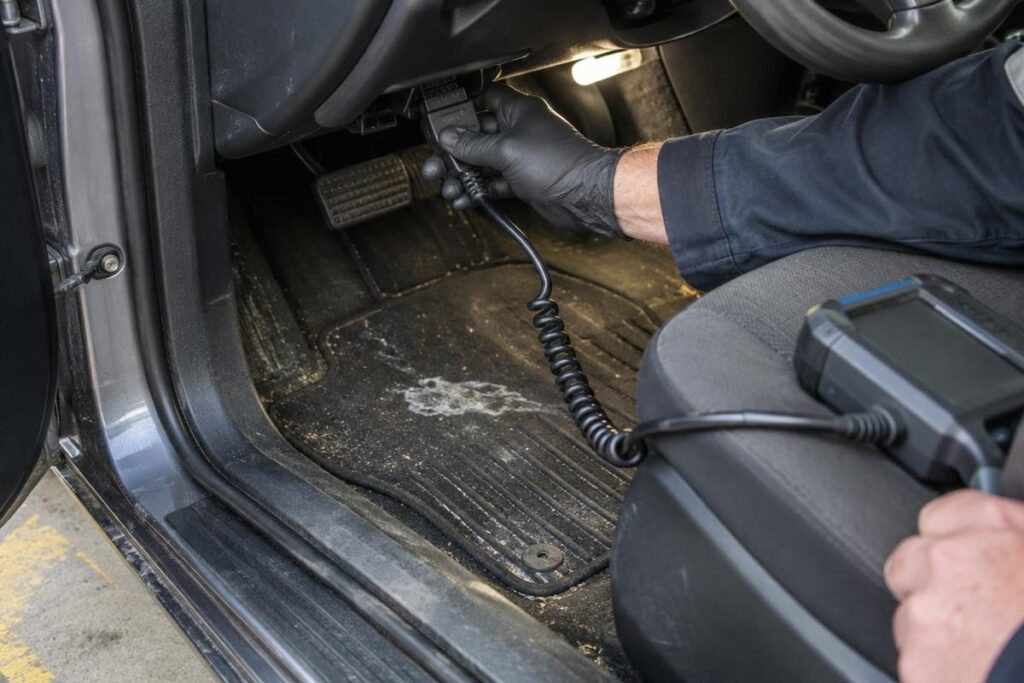
- Emissions test: on most 1996 and newer cars this is an OBD II scan of the onboard computer rather than a tailpipe sniff. 27 states plus DC test emissions somewhere, often only in specific metro areas or counties.
Massachusetts is the clearest example of a combined program: one annual safety and emissions inspection runs $35 for most vehicles and $15 for a motorcycle, and is done at roughly 1,800 licensed stations, according to Mass.gov. New York caps the fee at $21 upstate ($10 safety plus an $11 OBD test) and $37 in the New York City metro area, where the emissions part costs $27.
Inspection Prices by State: Safety, Emissions and How Often
The yearly cost column is a per-year figure. A test you pass every other year is split in half, and programs that only cover some counties are averaged across the whole state, which is why Georgia shows $15 even though drivers outside the 13 metro Atlanta counties pay nothing. We average this way because our calculators work at the state level, so if your county has no test, your real figure is $0.
| State | Safety check | Emissions | How often | Yearly cost |
|---|---|---|---|---|
| Arizona | No | Phoenix and Tucson areas | Mostly biennial | $8 |
| California | No | Smog check, 41 of 58 counties | Biennial | $25 |
| Colorado | No | 9 Front Range counties | Biennial | $12 |
| Connecticut | No | Statewide | Biennial | $10 |
| Delaware | Yes | Statewide | Annual or biennial | $0 (state lanes) |
| District of Columbia | No, ended 2009 | Districtwide | Biennial | $18 |
| Georgia | No | 13 Atlanta-area counties | Annual | $15 |
| Hawaii | Yes | No | Annual, new cars 2 years | $25 |
| Illinois | No | Chicago and Metro East | Biennial after 4 years | $0 (free test) |
| Indiana | No | Lake and Porter counties | Biennial | $0 (free test) |
| Louisiana | Yes, ending January 2027 | 5 Baton Rouge area parishes | Annual | $10 |
| Maine | Yes | Cumberland County | Annual | $13 |
| Maryland | At sale or transfer | 13 counties plus Baltimore | Biennial | $7 |
| Massachusetts | Yes | Statewide | Annual | $35 |
| Missouri | Past 10 model years or 150,000 miles | St. Louis area | Biennial | $15 |
| Nevada | No | Las Vegas and Reno areas | Annual | $20 |
| New Jersey | Commercial vehicles only | Statewide, new cars exempt 5 years | Biennial | $0 (state facilities) |
| New Mexico | No | Bernalillo County | Biennial | $8 |
| New York | Yes | Statewide OBD II | Annual | $21 |
| North Carolina | Yes | 19 counties, removal pending | Annual | $25 |
| Ohio | No | Cleveland area E-Check | Biennial | $0 (free test) |
| Oregon | No | Portland and Medford areas | Biennial | $13 |
| Pennsylvania | Yes | 25 of 67 counties | Annual | $70 |
| Rhode Island | Yes | Statewide | Biennial | $28 |
| Texas | No, ended 2025 | 17 counties, Bexar from November 2026 | Annual | $8 |
| Utah | No | Davis, Salt Lake, Utah, Weber | Depends on age | $15 |
| Vermont | Yes | OBD check statewide | Annual | $50 |
| Virginia | Yes, annual | Northern Virginia, biennial | Annual | $25 |
| West Virginia | Yes | No | Biennial since 2024 | $14 |
| Wisconsin | No | Milwaukee area | Biennial | $0 (free test) |
These 21 states require no periodic check, so the yearly figure is $0 in each. A few still look at a car once when it arrives from another state.
| State | What still applies |
|---|---|
| Alabama | Nothing periodic |
| Alaska | Nothing periodic |
| Arkansas | Nothing periodic |
| Florida | VIN verification for out-of-state cars |
| Idaho | Boise-area testing ended July 2023 |
| Iowa | Nothing periodic |
| Kansas | VIN verification for out-of-state cars |
| Kentucky | One-time check for cars registered elsewhere |
| Michigan | Nothing periodic |
| Minnesota | Nothing periodic |
| Mississippi | Nothing periodic |
| Montana | Nothing periodic |
| Nebraska | One-time check for cars registered elsewhere |
| New Hampshire | Repealed January 31, 2026, see below |
| North Dakota | Nothing periodic |
| Oklahoma | VIN verification for out-of-state cars |
| South Carolina | Nothing periodic |
| South Dakota | Nothing periodic |
| Tennessee | Ended February 2022 |
| Washington | Testing ended January 2020 |
| Wyoming | VIN verification for out-of-state cars |
Why the State Inspection Cost at the Counter Differs From the Yearly Figure
The price on the shop’s sign misleads in three situations.
Biennial programs. California’s smog check, Connecticut’s emissions test and Rhode Island’s combined program come due every second year. The table’s $25 a year for California is a $50 test every other year; Rhode Island’s $28 a year is $56 every two years.
Free lanes. Delaware, Illinois, Indiana, New Jersey, Ohio and Wisconsin all require a test for some drivers yet charge nothing at the lane, so the yearly cost is $0 even though you still have to show up.
Uncapped states. Pennsylvania sets the standards but not the price; each station sets its own inspection fee, and the safety check plus emissions test in the 25 testing counties is why it tops the table at $70 a year. North Carolina is the opposite: the annual safety inspection is fixed at $13.60, or $30 with the emissions part, and the $25 in the table blends the two.
Over five years of ownership the spread is wider than most people expect: $350 in Pennsylvania, $175 in Massachusetts, $75 at the national average and $0 in 21 states.
State Rules That Changed in 2025 and 2026
Several pages that still rank for this topic describe programs that no longer exist.
- Texas: the annual safety check for noncommercial vehicles ended January 1, 2025. Owners now pay a $7.50 inspection program replacement fee when they renew registration ($16.75 covering two years on a brand-new vehicle), which is the $8 in the table. The 17 emissions counties still require a test capped at $18.50 around Dallas and Houston or $11.50 in El Paso, Travis and Williamson, and Bexar County joins on November 1, 2026, per the Texas Department of Public Safety. Commercial vehicles still pay $40.
- New Hampshire: the 2025 state budget repealed safety and emissions checks for most passenger vehicles effective January 31 of this year. A federal judge ordered the program kept on January 27, the First Circuit stayed that order on April 30, and the EPA proposed a conditional approval of the repeal on August 11. Today no inspection is required, but the EPA’s final decision was still pending in early October.
- Louisiana: a new law ends the brake tag for most personal vehicles on January 1, 2027 and replaces it with a $6 QR code sticker linked to registration. Police stopped writing tickets for missing stickers on June 30. Five Baton Rouge area parishes keep emissions testing.
- North Carolina: a 2023 law and a July 2026 law drop emissions testing in 19 counties once the EPA signs off, per the NC Department of Environmental Quality. The annual safety inspection stays in all 100 counties.
If Your Vehicle Fails the Safety Inspection or Emissions Test
A failed result is a repair list, not a fine. The station tells you what failed, you fix it, and you return for a retest before the deadline on your report. Ask whether the recheck is free if you return to the same station; that varies by program.
The usual reasons a vehicle fails:
- Check engine light on. In OBD II programs a lit warning light or stored trouble codes is an automatic fail, even if the car runs fine. Erasing codes right before the test leaves the system “not ready”, which fails too.
- Worn brakes or tires. Usually the biggest repair bill here; see routine maintenance costs for typical brake and tire prices.
- Lights and glass. A dead bulb, broken turn signal or cracked windshield in the driver’s view can fail a safety check.
- Exhaust leaks. A rusted pipe fails both the safety and emissions sides where both are checked together.
Before you get your inspection done, walk around the car with the lights on and check the dashboard for a warning lamp.
How Long an Inspection Takes, and How to Avoid Paying for Two
The inspection process itself is short: a safety check usually takes 15 to 30 minutes of shop time, and an OBD II emissions scan alone is often done in 10 to 15. The wait is the variable. In sticker states the sticker shows a month, and most stickers expire at the end of it, so the last week of the month brings the longest lines at repair shops and state lanes alike. Going early in the month is the easiest way to save time.
Shopping around can save money too, in states that cap rather than fix the fee. When we checked the Texas DPS fee page in late October, its emissions-only figures of $18.50 and $11.50 were listed as the maximum charge for each inspection type, not a set price, so a station is free to charge less. Pennsylvania has no cap at all, which is why two stations in the same town can quote different prices.
Five Checks That Keep the Car Inspection Cost to One Visit
The fee is rarely what hurts. A second visit is, because a failed inspection means a repair bill plus another trip, and in some programs another fee. These checks prevent the most common repeat trips:
- Drive before you test, not right after a repair. Clearing codes or disconnecting the battery resets the car’s readiness monitors, and they need several days of normal city and highway driving to report ready again. Most OBD II programs tolerate only one or two incomplete monitors, so testing the morning after a repair often fails a car that is actually fixed.
- Tighten the gas cap. A loose or cracked cap lets fuel vapor escape, sets an evaporative system code and turns on the check engine light. It is the cheapest fix on this list.
- Walk the exterior lights with a helper. Brake lights, the license plate lamp and rear turn signals are the bulbs drivers cannot see from the seat, and a replacement bulb costs far less than shop labor.
- Bring current registration. Many stations will not inspect a vehicle without it, and some states also ask for proof of insurance.
- Ask about the retest window before you pay. Plenty of programs give a free or reduced recheck if you make the repairs and return to the same station within a set number of days. Price the work first with the car maintenance cost calculator so a quote that looks high stands out.
If a car keeps failing emissions after real repairs, ask the state program about a repair waiver. A number of emissions programs, Texas and Pennsylvania among them, grant one once you have spent a set minimum on qualifying repairs, which stops a worn-out engine from turning a low-cost test into an open-ended bill.
Pre-Purchase Inspection Is a Separate Cost
A pre-purchase inspection is a mechanic’s look at a used car before you buy it. It is optional and unregulated; you pay the shop of your choice, and it covers frame damage, leaks, a road test and a code scan. It does not replace the state inspection your vehicle must pass to stay registered. The car maintenance schedule shows which service items a pre-purchase report should confirm.
A certified pre-owned car has already had the dealer’s multi-point check, which is one reason it costs more (see new vs used vs certified pre-owned). That report was written by the seller, though, so an independent mechanic can still inspect the car for you. Anything the report turns up is bargaining power on price; compare the asking figure with the used car value calculator before you negotiate.
To see what the car inspection cost adds in your state, open the registration fee calculator, which folds the yearly figure into renewal, or run the ownership calculator to compare it with fuel, insurance and depreciation. If you live in Pennsylvania, call two stations before you book, since each one sets its own price.
Frequently Asked Questions
How often do you need an inspection?
It depends on where the car is registered. An annual inspection is the rule in Massachusetts, New York, Pennsylvania, Vermont and Virginia (safety); biennial programs include California, Connecticut, Rhode Island and West Virginia. Missouri’s safety check applies only to cars past 10 model years or 150,000 miles, and 21 states have no periodic requirement.
Are vehicle inspections required in Alabama?
No. Alabama has no periodic safety inspection or emissions test for passenger vehicles, so the yearly inspection figure there is $0. It is one of 21 states with no recurring requirement, along with neighbors Florida, Mississippi and Tennessee.
Is NH getting rid of inspections?
Yes, for now. The repeal took effect January 31, 2026, and since the First Circuit stayed the injunction on April 30, New Hampshire drivers need no inspection. The EPA proposed approving the change in August; its final decision was pending in early October.
How much is a normal car inspection in PA?
Pennsylvania does not cap the fee, so each station sets its own. This page uses $70 a year for a safety inspection plus the emissions test required in 25 of 67 counties, the highest yearly figure of any state.
Can a car pass inspection with the check engine light on?
Not in an OBD II emissions program. A lit check engine light means a stored fault, and the test fails automatically. Safety-only states may not test for it, but the repair still has to happen.
What happens if I drive with an expired inspection?
You can be stopped and ticketed, and the fine varies by state. Where the inspection record is tied to registration, an overdue check can also hold up your renewal, which is often the bigger problem.
Estimates only, not a quote. Yearly figures are planning estimates, and most have not been checked against a current fee schedule; the station or your state sets the fee you pay. Last reviewed: October 2026.